Today I attended the XBIZ legal webinar on the potential impacts of the Trump administration on the adult creator community and industry. It was seriously informative and dynamic with an all-star cast of panelists moderated by Clara Kitty, cam model and clip producer. We heard from adult entertainment and free speech lawyers Corey D. Silverstein and Larry Walters, Alison Boden, Executive Director of the Free Speech Coalition, Savannah Sly, founder of the New Moon network. I wanted to write a brief summary of what I took away from the panel in terms of key points and thoughts about the future.
One of the first ideas which stood out to me which was discussed by the panelists has to do with the 1st Amendment. This is the legal concept that restriction of speech on the basis of content is a legal or governmental practice which has to be subject to serious outside oversight —there must be really important cause if restrictions on 1st Amendment rights are put into place in any circumstance, whether on an individual level or on the level of policy. I think this is important because we live in a polarized era where saying the wrong thing with regards to political, cultural and social issues can yield serious forms of social exclusion, marginalization, and bullying (including cyberbullying) which can have deadly results. We need to be more acclimated to the notion of what Michel Foucault called an “ethics of discomfort;” a commitment to truth and a principle of what April Flakne called “fearless speech” which often involves having to additionally listen to perspectives which we find unpleasant or with which we disagree.
A primary topic in terms of the operations of the state apparatus which greatly concerned me to learn about is the fact that AI surveillance is being used to exacerbate an ICE practice of detaining sex workers at the U.S. border. Sophie K Rose of Novara media reports in her article “Sex Workers Are Being Detained At The U.S. Border,”
Under current laws, any person US border agents suspect has sold sex in the last ten years can be denied a visa, refused entry, detained, deported and banned from the US for five to ten years.
Sophie continues:
Based on stories shared with the [United Sex Workers trade union], Lorelei said workers believe the border force uses “facial recognition surveillance technology and more general background checks”. Some speculate that sex work advertising websites might share workers’ personal data with the state, while others believe the state has ways of accessing this data without websites’ permission.
If you aren’t an adult creator, you may wonder from a selfish perspective why you should be personally concerned with this phenomenon. If someone is not a trafficking victim and is voluntarily engaging in adult creator work, they are making a personal choice to pursue a profession in adult content creation out of their own liberty and for which you are not absolutely personally responsible. However, the sociocultural history of the United States and of the pornography industry—of all forms of sex work in general—shows us that both criminalized sex workers and legally-acting adult creators are generally test markets, test subjects for policy, and generally merely the first and most vulnerable folks to experience the power-effects of new government policy or business measures which then can set a standard to be applied to the general populace.
In this case, the concern is privacy rights. As I have written elsewhere, Simon Goldstein has done powerful research into what he calls the AI Safety Dynamic, and specifically has raised concerns about the privacy rights of consumers of adult content if “always agreeable” artificial intelligence relationship chatbots such as those created by the company Replika are implemented. While it’s not often discussed in “polite company,” adult entertainment and adult creator work is an industry of incredible magnitude and significance. Artificial intelligence on Google yields the following information: “the porn industry in the United States generates between $15 billion and $97 billion annually, which is more than the combined revenues of ABC, NBC, and CBS, and the NFL, NBA, and MLB.”
The effects of normalizing the invasion into adult creator’s private lives include the erosion of the privacy rights of all United States citizens. If you think, as I do, that solitude is critical to a well-lived life, or what Aristotle termed eudaimonia, if you think with Rainer Maria Rilke that friendship is “the love that consists in this: the two solitudes protect and border and greet each other,” then you should understand my position.
Another concerning legal phenomenon which the Free Speech Coalition reports is that actors in the U.S. government are taking steps to sue adult creators if a minor accesses an adult site regardless of demonstrable harm. Legislators and policymakers are taking steps to redefine the concepts of “consent” and “human trafficking” in a manner generally recasting onerous regulations with the guise of “concern,” which would often sweep voluntarily-acting sex workers and adult creators into Kafkaesque bureaucratic legal nightmares under the pretense of “protecting children,” a goal which certainly no one can disagree is noble, but which it is therefore all the more critical is only undertaken properly and in good faith.
Alison Boden of the Free Speech Coalition reports that there is some possibility of progress with regards to banking fairness; we have seen reporting such as that by Jenavieve Hatch for the Huffington Post on the U.S. government seizing the financial assets of sex workers without cause or explanation. If you are a woman who is not a sex worker or adult creator who thinks that you won’t be the next target of this kind of economic disenfranchisement, if it’s not opposed as a practice, you are more naïve than I believe the average intelligent woman to be and need to reconsider your worldview in an era after the overturning of Roe v. Wade.
The question of obscenity prosecutions is very important and to me was probably the most intellectually provocative. Sen. Mike Lee (R-UT) is advancing a bill to redefine “obscenity”—“to establish a national definition of obscenity that would apply to obscene content transmitted via interstate or foreign communications,” arguing that obscene speech is not free speech protected by the 1st Amendment. And what is the popular understanding of this definition of obscenity? Typically, people prosecuting obscenity resort to the truism “I can’t tell you what obscenity is, but I know it when I see it.”
It’s beyond obvious that certain forms of pornographic content, such as scatological imagery, imagery of bestiality, or imagery of sex with children range from pushing the limits of the morally acceptable to being completely unacceptable moral transgressions. However, we have seen practices such as anal, oral, premarital, homosexual or adulterous sex included in definitions of unlawful sexual acts which could by some religious conservatives be considered “obscene” and thus merely discussing them would be prosecutable. During the Bush-Reagan era we saw obscenity task forces assembled to prosecute obscenity cases, but the good news is that those have been disbanded.
We might (or at least, could) additionally see private individual or class action suits against creators whose content is considered “obscene,” because the law is very vague and overbroad, but an organization called PHE sued the Department of Justice with a good outcome regarding obscenity laws being used to “drain legal talent.” This success occurred even though typically the DOJ wins 99% of cases. Lawyers thus tend to think a return of the Reagan-Bush era obscenity task forces would be ill-advised. There have been very few cases of obscenity prosecutions since the task forces were disbanded. I don’t think the Trump administration would truly want to bring back the U.S. equivalent of the Islamic Revolutionary Guard Corps in this country.
During the XBIZ seminar, I additionally learned that the Woodhull Freedom Foundation has successfully brought legal challenges against FOSTA/SESTA. (They also have a learning hub which looks very promising.) There was a question raised during the panel discussion—would a Trump Department of Justice prioritize FOSTA/SESTA prosecutions? The panelists do unfortunately believe we may see potential additional criminal enforcement of the statute. There is much work to be done to oppose this legislation and protect sex workers and adult creators from its effects, which have included the deaths of sex workers in criminalized sectors of the industry forced to resort to streetwalking after FOSTA/SESTA shut down Backpage.com. For further information and background on this topic, see the Huffington Post—‘This Bill Is Killing Us’: 9 Sex Workers On Their Lives In The Wake Of FOSTA.
The question was asked: what steps would lawyers advise we take in the hypothetical case that pornography is banned? The answer the panelists seemed to agree upon is that lawyers will be suing quickly if that were to occur, but it’s very unlikely.
When asked about her perception with “boots on the ground” of current sentiment among the sex worker and adult creator communities, Savannah Sly, Founder of New Moon Network, relates that current feeling regarding the looming prospect of a Trump administration among sex workers and adult creators is mixed, but many are feeling tense, frightened or lashing out.
This concludes my report back on the XBIZ legal webinar on the Trump administration and adult creator work featuring panelists such as Corey Silverstein and others. If you want to support this cause and help people directly, it’s a good idea to support their community organizations in various ways, for example by donating to the Free Speech Coalition, the “nonprofit non-partisan trade association for the adult industry.”
“The invention of slavery as a juridical institution allowed the capture of living beings and of the use of the body into productive systems, temporarily blocking the development of the technological instrument; its abolition in modernity freed up the possibility of technology, that is, of the living instrument. At the same time, insofar as their relationship with nature is no longer mediated by another human being but by an apparatus, human beings have estranged themselves from the animal and from the organic in order to draw near to the instrument and the inorganic to the point of almost identifying with it (the human-machine). For this reason—insofar as they have lost, together with the use of bodies, their immediate relation to their own animality—modern human beings have not truly been able to appropriate to themselves the liberation from labor that machines should have procured for them. And if the hypothesis of a constitutive connection between slavery and technology is correct, it is not surprising that the hypertrophy of technological apparatuses has ended up producing a new and unheard-of form of slavery.”
― Giorgio Agamben, The Omnibus Homo Sacer
Artificial intelligence is, for better or for worse, an emergent technology which affects myriad spheres of our lives. It is arguably an all-encompassing category—between large language models, artificial intelligence generally, chatbots, and the concept of machine learning, we have an emergent trend for a type of technology which is unprecedented, undefined, and with effects that touch all parts of life in ways we are only beginning to understand. Its influence is felt in warfare, in the form of artificial intelligence drone swarms; it is felt in environmental stewardship work, such as drones deployed for reforestation projects; it is felt in the multitude of applications for ChatGPT —and this clearly includes within the adult creator industry. There is ChatGPTease, a ChatGPT platform for adult content creators—on the one hand. There is Replika, a company utilizing large language models to create a custom “virtual girlfriend” chatbot with whom you can talk about adult themes and exchange NSFW photographs, on the other.
For our part, the Niteflirt platform bans AI-generated content, as you can read about in the Niteflirt Rules within the terms and conditions of service. This is certainly for many reasons—while I cannot claim to speak on behalf of Niteflirt as a company itself, I can offer my own opinion. One reason to prohibit artificial intelligence generated content is because a Flirt could use AI-generation to create photographs of a nonexistent human being and pose as being a person who does not exist. Another reason is because a Flirt could use images of an existing person and create images simulating that person engaging in sexual behaviors without their consent, a phenomenon known as “deepfake image-based sexual abuse.” This phenomenon is prosecutable criminal behavior and can result in the perpetrator being arrested or subject to restraining orders and lawsuits, depending upon the context. If you are experiencing this form of sexual abuse, you can contact the law offices of Carrie Goldberg for legal representation.
While it may be less than thrilling to engage with an adult content creator who utilizes the large language model platform ChatGPTease to auto-generate their content, this activity in itself does not seem ethically offensive, and is certainly entirely legal. If you dislike the notion of a Flirt using ChatGPTease to create advertisements for their services, you should probably just direct your business elsewhere, if you are able to sense that a Flirt is using ChatGPTease to begin with.
What we can ask is this—what about chatbots like Replika, which promise a sexy virtual girlfriend with whom you can share anything without having to actually engage with another person? Although it might be more affordable in terms of money paid in return for a given duration of entertainment time provided compared to speaking to a real person on Niteflirt, there are ethical reasons—and even selfish reasons—to prefer speaking to a Flirt on Niteflirt over speaking to an artificial intelligence chatbot. Even further—there may be legal reasons to prohibit the use of artificial-intelligence generated adult chatbots. “Men Are Creating AI Girlfriends and Then Verbally Abusing Them,” an article written for Futurism.com by Ashley Bardham, provides information that can be helpful in determining the answer to some of these questions.
Firstly, the ethical dimension. “Some users brag about calling their chatbot gendered slurs,” Bardham writes, “roleplaying horrific violence against them, and even falling into the cycle of abuse that often characterizes real-world abusive relationships.” This is clearly not healthy behavior; it’s not going to be good for the gentleman using the chatbot, and it’s not going to be good for the women and other people in the lives of gentlemen using AI-girlfriend chatbots. As the ethicist Olivia Gambelin pointed out to Futurism for Bardham’s article, artificial intelligence does not have a consciousness akin to another human being, different from oneself, with all their motives and desires and rights and realities. While you might think this means it’s okay to treat a chatbot however you want, the reality is you are training your brain with a simulation that will creep back into how you treat other people in your real life. Some people do this with adult creators such as Flirts, too, and it is an ethical wrong in those cases just the same—or worse!
Secondly, there are also selfish reasons to be concerned about artificial intelligence chatbot girlfriends. In the ancient Greek myth of Pygmalion, Pygmalion creates a statue of his ideal woman, Galatea. He falls in love with this statue, and the Goddess Aphrodite blesses his love. Galatea therefore comes to life and loves him back. But do chatbots have this blessing of Aphrodite?
Pygmalion and Galatea by Louis Gauffier
Well, this isn’t hard. A chatbot is ultimately not a real person, and never will be. So, if you are engaging with adult content in order to explore and learn about authentic human sexuality and improve your skills in seducing women, as some men do in addition to engaging to fulfill fantasy desires, a chatbot is not going to be helpful. A chatbot will simply mirror back to you whatever it “thinks” you want to hear rather than teaching you about what real women want. It can also lull you into a sense of complacency that you can disclose whatever you want about yourself, because it’s not a real person, but that can raise privacy concerns, because even if the chatbot is not a real person, the people who run companies like Replika are real people, and they are collecting data about the interactions which their users have with Replika chatbots. If you don’t want a corporation to have the ability to collect all that information, then talking with a Flirt on Niteflirt is probably a better option. In addition, talking with a Flirt (or Skyping with them during a Phone with Cam call!) is probably just a lot more pleasurable and fulfilling than a chatbot girlfriend could ever be.
Thirdly, there is a legal question about the ethical appropriateness of artificial-intelligence chatbots which simulate human love and affection. There is fascinating and important research into this topic going on around the world. One researcher asks, “What is it going to look like when we have AI relationship chatbots where you have human assessors look at answers [to questions] and grade which one is more likely to make the human user fall in love with the system?” Dr. Simon Goldstein, an associate professor at the University of Hong Kong, specializes in research into the ethics of artificial intelligence. In an interview with “Science, Technology and the Future” called The AI Safety Dynamic, Dr. Goldstein continues,
“I think it’s just completely unpredictable what kind of system will come out of that [making humans fall in love with AI chatbots], and very disturbing to think about the kind of control over our personal lives that will give private companies in charge of these programs.”
What will it do, Goldstein asks, to have machine learning targeting a goal of maximizing its own ability to “control our desires?”
Dr. Simon Goldstein, ethicist, researcher and associate professor at University of Hong Kong
The power of optimization, he says, will make these products “extremely addictive.” Ultimately, Dr. Goldstein goes so far as to say AI chatbots should just be illegal. “It seems like there is no social value for them, it seems like a pretty easy thing to regulate. . . I see very little public benefit.” Dr. Goldstein predicts that in the next few years, governments will get far more serious about regulating AI, and we will have to have some consequential discussions about what kinds of uses are allowed.
The fact is, realness and sincerity in terms of pleasure and desire is sexy and the focus on interactions with real-life women is probably not going anywhere in the adult creator industry. After all, ethicist Olivia Gambelin said to Ashley Bardham with Futurism.com for her article, “'[chatbots are] no replacement for actually putting the time and effort into getting to know another person […] a human that can actually empathize and connect with you and isn’t limited by, you know, the dataset that it’s been trained on.’” And it’s true. You can get so much more from interacting with a real woman as you can do on Niteflirt than you ever could from an AI chatbot, and without quite the same risks to privacy or of addictiveness—although we know calling Flirts can be so much fun that sometimes gentlemen say they feel as if they are “addicted” to our services!
For my part, I am careful to take certain precautions to assure artificial intelligence does not encroach on my business ethics in working professionally as an adult creator and a Flirt. While I did use ChatGPTease to generate ideas for Femme Domme video premises to create and sell as Goodies on the Niteflirt site (forthcoming!), I write all of my own copy and content published to social media myself—it is all original. And while I do use some photo-enhancement software such as the open-source image editing software program “GIMP” to fine-tune the images and videos I create and share, I keep it in touch with reality. Most importantly, if you want to verify that I mean what I say on this topic, you can always schedule a Phone with Cam call with me, and speak to me via Skype with my stunningly clear and high-resolution 4K webcam, to assure that yes, my photos are actually me, and I am actually the brilliant, beautiful woman that I say I am! I try not to be too addictive.
A Photograph of Princess Giulia shielding her face with a copy of The Phenomenology of Spirit by Georg Wilhelm Friedrich Hegel.
Thank you so much for reading this piece. If you want to learn more about the problems inherent with types of pornography that reduce your consciousness of the consciousness of the other person (the woman), I recommend you watch my video “Active Love and Love in Dreams—The Virtue of the Virtual (Let A Dominatrix Teach You The Difference Between Fantasy and Reality in Sex,” available on my Youtube channel. If you want to discuss these issues with me directly or share your experiences—or if you are just feeling sexy and want to engage with me for any reason—please reach out by chat to schedule a Phone or Phone with Cam session with me. Lastly, you should always feel free to call me on Niteflirt anytime you see me online.
I would like to thank you once again for reading. I look forward to speaking with you about this or any other topic you desire—soon!
I was contemplating a favorite, if highly elementary paper I have written on Friedrich Nietzsche, critiquing Luce Irigaray’s Marine Lover of Nietzsche. I wrote this in 2010. Even as recently as 2018 I still hadn’t realized that the notion contained within this book, that of Irigaray critiquing Nietzsche “from the point of view of the perspective of the element of water” is not nearly as absurd as it sounds in terms of having a historical philosophical prcedent. Who else has thought of philosophy in terms of the elements? The pre-Socratics.
If you are interested, my 2018 Abstract reads as follows:
This paper engages the contradictions and complexities in being both a Nietzschean and a feminist. In it, I am thinking about how to affirm difference between the sexes without resorting to a binary concept of gender and without compromising equality. I use Deleuze’s reading of Nietzsche to critique the shortcomings of one potential feminist interpretation of Nietzsche found within Luce Irigaray’s “Marine Lover of Nietzsche.” Specifically, I identify Irigaray’s approach as motivated by ressentiment, which Nietzsche would link to nihilism. Irigaray accuses Nietzsche of not recognizing the “true” and “essential” nature of femininity, which she says lies partially in the “self-containedness” of “female” genitals, i.e., the vulva. However, linking essential femininity to “female” genitals reinforces a transphobic model of gender. Further, the fact that Nietzsche’s image of women does not reflect an accurate picture of woman as such does not prove that the way he uses “woman” as a metaphor has no philosophical or literary value.
Irigaray’s complaint that Nietzsche fails to acknowledge her “true” self is already a profoundly anti-Nietzschean attitude. It undermines her own autonomy by reinforcing her dependence on his recognition. It is also primarily used to generate a reason to punish Nietzsche—who probably understood women poorly because he was more or less celibate his entire life—for his autonomy from women. Again, for Nietzsche the desire to punish is always an indicator of ressentiment. Rejecting these ideas, I go on to put forward my own interpretation of how to approach Nietzsche’s moments of misogyny while continuing to appreciate his greatest insights—pointing to the power of laughter, levity, and forgetting, which taken together open up the possibility of affinity and friendship between men and women.
For me at the time, it was basically a highly elaborate Nietzschean take on the question “Can men or women ever really be friends?” The paper is probably lacking greatly in systematic rigor in terms of fully contextualizing Irigaray’s thought in relation to the pre-Socratics. But Nietzsche is very important to me, and a friend once described my superpower as “the ability to recite any passage from Friedrich Nietzsche at will or upon command,” so there is probably some value to my ideas about him. With that in mind, I am going to go investigate the pre-Socratics now. Perhaps that will help give me a greater insight into my own thinking.
You can read Feminist Or Otherwise: Friedrich Nietzsche and the Affirmation of Sexual Differencehere.
“To begin with, what is the general meaning of the word “parrhesia”? Etymologically, “parrhesiazesthai” means “to say everything — from “pan” (everything) and “rhema” (that which is said). The one who uses parrhesia, the parrhesiastes, is someone who says everything he has in mind: he does not hide anything, but opens his heart and mind completely to other people through his discourse. In parrhesia, the speaker is supposed to give a complete and exact account of what he has in mind so that the audience is able to comprehend exactly what the speaker thinks. The word “parrhesia” then, refers to a type of relationship between the speaker and what he says. For in parrhesia, the speaker makes it manifestly clear and obvious that what he says is his own opinion. And he does this by avoiding any kind of rhetorical form which would veil what he thinks. Instead, the parrhesiastes uses the most direct words and forms of expression he can find. Whereas rhetoric provides the speaker with technical devices to help him prevail upon the minds of his audience (regardless of the rhetorician’s own opinion concerning what he says), in parrhesia, the parrhesiastes acts on other people’s mind by showing them as directly as possible what he actually believes.””[This] feature of parrhesia: it involves some form of courage, the minimal form of which consists in the parrhesiast taking the risk of breaking and ending the relationship to the other person which was precisely that made his discourse possible. […] So, in two words, parrhesia is the courage of truth in the person who speaks and who, regardless of everything, takes the risk of telling the whole truth that he thinks, but it is also the interlocutor’s courage in agreeing to accept the hurtful truth that he hears.” —Michel Foucault
The Abduction of Psyche by Zephyrus to the Palace of Eros. Pierre-Paul Prudhon. Oil on canvas (1808).
It is impossible to do sex work for very long—or, to the point, to do sex work very well—without surrendering something which is considered by many to be a type of “innocence” lost. Conventionally, this ‘innocence’ is normatively evaluated as positive even though its loss, in fact, entails special access to a certain form of truth. It may be the case that in one sense, a normative taboo against the loss of ‘sexual innocence,’ a form of mandatory ignorance, is itself quite valuable, towards certain political or social ends. Nonetheless, it is also the case that the access to truth upon which this concept of “loss” is founded is actually both quite valuable, and quite real.
Perhaps not all have ears—or heart—to endure or appreciate this truth, to allow it to settle coherently among the other presumptions on sex and love which constitute a view of the world. For many, this type of realization entails significant upheaval and pain—for example, in the pure horror of the arbitrary. Only a few will both be capable of enduring that horror and also understanding its worth. In any case, behind that horror lies this truth: in order to expertly do sex work, and gain mastery of it as a skill, we must be prepared to categorically surrender the notion that romantic love is special, unique, or perhaps even uniquely valuable. In developing the refined, complex skill set necessary to excel in sex work, we do not always learn to cleave romantic love from sex. Instead, we learn to no longer conceive of romantic love as rare and exclusive, nor to see it as arising only between one single person and another, who are then bound together, inevitably, for all time.
In this sense, one might think that to support the decriminalization of sex work is intrinsically a socially liberal political position. But as a friend of mine who teaches at Harvard commented to me once, the nuclear family and its concomitant love-sex-monogamy formation is a fairly recent historical invention. It requires active support to uphold; its basis is a contingent ethical and philosophical justification; and yes, it is true that this basis is and ought to be subject to questioning and critique. For this we do well to talk with sex workers.
The reality is that love exists and does not exist, at times, between sex workers and their clients, and elsewhere, outside traditional relationships, diffuse throughout the world. It may be wholly present in an encounter, and then vanish forever. It may permeate an interaction and persist long after it ends; it may be simultaneously there, and not there, contemporaneously within the schism of a single occasion. These ideas are poorly understood, even if the populace pretends at adoring the archetypal ‘hooker with a heart of gold.’ Her ‘true love’ develops through a sex work transaction, which allows her to be absolved of the unenviable work. Thus, the myth that romantic love involves no real ‘labor’ is complete. In any of these cases—save the last, well-worn and well-loved, Julia Roberts, Pretty Woman—the outcome is that sex workers have a capacity to understand the contingent and accidental nature of love, which most other people find intuitively frightening, isolating, even cold. In fact, when a sex worker surrenders the ideal of a fateful love which could never be contingent, this is cited as proof of the corruption of her profession, her contemptible core.
The sex worker often may become a scapegoat (ע ָזא ֵזֽל) virtually in the literal religious Judaic sense. Just as the religious Jewish scapegoat was sent into the wilderness to expiate the sins of the community, the sex worker lives at the margins. Upon her, men unload all untold sins, inexpiable truths, real desires experienced as excess, emasculation, deviance—or simply too harsh to unleash upon any “Good Women”—
Men may even unload the sins of many such Good Women, which are relayed as a smoke signal to the whore through the conduit of Man. The overwhelming and invisible reality, of course, is that not all these desires or truths are sexual—perhaps even the majority are meaningfully nonsexual. They are affective, labile, unclear, existential, emotional, romantic, political, affective, philosophical, physical, psychological, and religious. They derive from blind pursuit of pleasure, from misogyny, loneliness, confusion, disability, terminal illness, unintelligence, isolation, or fear. From suppression, aggression, pain, homophobia, and yet insight, shame—and also reverence, hope, self-overcoming, and love.
Indeed, sometimes there exists an injunction that the very truest of loves must be exorcised from a man through his patronage of a whore. Throughout, there is one constant: Man casts his desire (which is a hidden Truth) negatively as sin; it is what the archetypal whore will absorb. She is then cast out into the wilderness, exiled—the just dessert of her receptivity—and thereby she symbolically redeems the whole decent horde of Humanity left behind. Lives rise and fall on this axis. It is wholly superstitious and irrational yet entirely real. This is no ancient lore; it is the everyday being of a whore. To us, and for us, however—us, the whores—it is different. Apart from the impact of stigma and criminalization—which of course is contrived and comes afterwards—we would in no way experience the pleasure or worth of our labor as being intrinsically corrupt. We witness the interior of sin, its hidden worth, and human face—not merely in profoundly psychic or normative terms. Not always as laudable ascesis—pragmatically, we gain an understanding which simply enables our material survival. Mastery entails a capacity for volleying the bestowal and deprivation of pleasure into forms of economic, social, sexual, psychological, and even political and religious control. We exercise power in this subterranean manner, but it is no less real for that. Some might argue it is all the more challenging to supersede as a result of its exercise being concealed, indirect, not overt. Theoretically, we gain access to rarefied and uncommon forms of wisdom in this process, which the laypeople are trained to revile because they are forbidden to know.
One primary forbidden truth is that love is so intrinsically human that no “true” love is ever even partially either fragile or irreplaceable. Love is not subject in the manner we presume to laws of an objective market or economic scarcity. It is a powerful force that can truly generate and regenerate itself between strangers, between clients and providers, in and through an entirely transactional encounter, in fleeting moments of anonymity. Transaction inexorably exists in “conventional” romantic relationships; inversely, in the transaction of sex work there often exists affection, intimacy, or even a rare ‘true love.’
One derivative truth is that love is sufficiently diffuse enough to let go. Genuine intimacy, which may appear at times to exist in only fleeting and transitory moments, is never truly so lost and irrecoverable as common understanding implies. Often the most precious forms of love will suffocate, if one attempts to prolong them, identify them, or subject them to any type of fearful approach. This goes against all we are taught about the manner in which monogamous love proves itself, through notions of possession, property ownership and jealousy. In particular, it goes against what women are taught as they age in an extrinsic mandate of unworthiness and fear—the false choice, between false propriety in rushed marriage, and false loneliness of well-earned solitude in age.
Due to a lack of understanding of these truths, laypeople cling violently to rigid and prescriptive ideals for relationships based on the nuclear family and couple form. These are sometimes viewed as practical arrangements. Indeed, they often are nothing more or less than that. Many traditional “marriages” entail much more exploitative and banal forms of “sex work” than the most meaningful encounters which a professional sex worker has. Laypeople, however, struggle to function in the face of such unfixity; thus, traditional marriage is mythologized, both as the most legitimate social currency of love, and as intrinsically more gratifying than any love available to a woman who is or has been a “whore.” Each of these are indeliberate lies.
Laypeople will understand consummate romantic love teleologically as at least one central component among those things which determine our identity and worth as human beings. Clearly love is an influential force in human life. But what is amusing is that historically, the unrivaled autonomy women access in sex work empowers them economically and politically in a way fundamentally inaccessible to the Wife. In turn, it is deeply ironic that such autonomy has granted the sex worker her own private, affective world—which, unlike so many marriages, is characterized by a free expression of her own desire, fully uncompromised by any economic coercion of the heart. This concealed truth, upon which the whore’s power is based, is that the individual is far more independent from the couple form per se. Simultaneously, the same truth entails that all of us are far more interdependent within the community of humanity than we know.
For most, adulthood entails the gradual attenuation of friendship in favor of an emphasis on the exclusive claims to legitimacy exercised by the affective and sexual bonds of romantic love. The self and the “significant other” are bound together, for all time. The unlucky, who of course are also the majority, find themselves corralled into “romances” which are fundamentally incompatible with the free expression of their sexual or emotional lives. Far from a Disney ending, this is nonetheless widely simultaneously seen as normal, expected, and unchangeable. It is even deemed inappropriate to seek an outlet in one’s friends or greater community beyond this, even when such outlets might make a primary partnership more gratifying and more sustainable.
This is a great mistake of humankind; it is one which sex workers witness from the margins with humor and tragic insight. We know the secret of your unhappiness; you proclaim to us that our own secret self-knowing is, itself, a thing which has its origin in a curse. Again, and again, you cast us out into the wilderness; you are welcome to continue; the truth will persist. As long as truth persists, the whore will survive.
The ‘human’ is an embodied and embedded being, existing as the intersection point for a given rhizomatic network of forces constituting their social world. Not coupled like songbirds in divinely ordained ordered pairs, we are not bound to the number “two” by any physical or mathematical law. The will emerges from and returns to its Dionysian drove. The couple form is Apollonian, a shield us from the uncoupling of the drove. Yet if we let ourselves fall, amidst such flux and infixity, we will find we are actually safe in the haven of the swarm. Often, we are far safer there, than nestled and isolated into an Atomic Pair. “A free life is still free for great souls,” said Nietzsche. Rare possible formations of friendship incubate in this instability and on its condition, romantic or otherwise, both or neither. Just as Foucault described historical instances of lesbian love: here exist “dense, bright, marvelous loves and affections” which all grow “very dark” very “sad,” in turn.
Amor e Psyche, Giuseppe Maria Crespi. Oil on canvas (1709).
What is ultimately most compelling is the activity of such loves. Their very being asserts itself actively in relation to the institutions of dominant powers and mores. In contrast, the passivity of any relationship derived negatively, from grand old archetypes, proscribed through withering institutions and ruins—is easily eclipsed by inalienable joy. It is accessible perhaps, too, to the “lonesome” and occasional, noble “twosome,”* but it is a thing no one can credibly assert dwells anywhere in “the couple form.”
Thank you for reading! Princess Giulia
*This notion of the “lonesome and the twosome” is from the following excerpt from a passage on the State called ‘The New Idol,’ in Friedrich Nietzsche’s Thus Spake Zarathustra:
The earth is free even now for great souls. There are yet many empty seats for the lonesome and the twosome, wafted by the aroma of still seas.
A free life is even now free for great souls. Truly, whoever possesses little is that much less possessed: praised be a little poverty!
Only where the state ends, there begins the human being who is not superfluous: there begins the song of necessity, the unique and inimitable tune.
Where the state ends—look there, my brothers! Do you not see it, the rainbow and the bridges of the Ubermensch?—
I just found this old interview I did in 2016 with PJ. It’s super long, so if you’re a sick freak who is obsessed with me and stalks me and watches everything I do, you’ll love it. Just kidding, it was really fun and it’s good to have people who supported me in my work early on, and who were willing to go interesting and novel places in conversation about a profession whose stereotypes kind of define the archetype of ribald stereotypes. Enjoy! XOXO
Giulia Ricci(@msgiuliaricci @ThankYouGiulia) is a perennial philosophy student, visual artist, and professional-virtual Femme Domme currently revising a philosophy paper about what a friend described as “the art of resistance to an overly limiting category of ‘the human,’ and the importance of the concept of friendship to navigating that largely uncharted terrain.” (Ed. This interview is from 2016, but I’m still revising it! LOL)
PJ Patella-Rey (@pjrey) is a sex work/tech writer and gender & sexuality instructor with xIndustryBooks & a host of The Peep Show. He is a mostly former content creator. He co-founded the Cyborgology blog and the Theorizing the Web conference.
Together, they did an hour-long interview regarding Giulia’s experiences as a sex worker. They covered some terrain that they particularly hope will be interesting to those who are not familiar with the sex industry from a worker’s perspective.
Interview
PJ: Tell me the story of how you started sex camming.
Giulia: when I was 19 — 29 now — I went on a sugar daddy dating website. And, that was the first sex work – like activity that I engaged in.
PJ: What website was that?
Giulia: SeekingArrangement.
PJ: Is that still around?
Giulia: Yeah, it’s still around. It’s gotten a lot bigger actually.
[Call dropped]
PJ: So you are saying SeekingArrangement was your first experience…
Giulia: And that really brought up a lot of the questions I have about the legal status of sex work right from the beginning. As far as I know, what I did was legal; it’s portrayed as legal. But, it’s also confusing to me why it’s legal. It’s very formally stipulated as a transactional form of sex work. On the website, when you’re filling out your profile, you specify the dollar amount per month that you require from your sugar daddy. So, that seems pretty straightforwardly like exchanging money for sex.
I had differing experiences on that website: Some were in line with the best-case scenario and some were mostly just trying to treat it as prostitution.
PJ: Some of the clients?
Giulia: Yeah, they would often portray themselves as wanting to have an ongoing sugar daddy relationship, then they would just kind of pressure me into sex, give me money, and never talk to me again.
But there was one interaction with an older man who is a filmmaker. I shouldn’t give too much information about him. He’s very wealthy. He’s involved in filmmaking as well as film festivals. He’s a painter and was a former professor at [a prestigious university in the North East]. He and I have a great relationship that continues to this day. He really acted as a mentor to me, as well as supporting me financially. Regardless of whether he’d seen me in the last five years, he’d still send financial support to me for my art projects and things like that, which he was interested in seeing me pursue. So that was a really positive interaction. I choose to focus on that more than the negative interactions I had.
Because of that experience, I Googled camsites out of curiosity. Also, because I don’t have to worry about the guys pressuring me to engage in prostitution; it’s not physically possible. It’s safe in many other ways, in terms of not having to actually have sex with anyone.
All of that led me to be curious about it. In 2009, I tried MyFreeCams for a little while. It was alright. But, for whatever reason, I wasn’t emotionally prepared to do it as much as I am now. So, I stopped after a few months. Then, last June, I went back on that site, and I started having a lot of success.
Later, I found NiteFlirt from a friend, who said that it was better than MyFreeCams. I found that it was, so I’ve been working on there since. I’ve put a lot of work into developing my listings there, my advertising, and all of that. I’ve made a lot of money and have had some really interesting experiences.
PJ: You just raised so many interest questions for me. I’m just going to try and tackle them in order. So, if we can go back to your experience with the sugaring site: You met those sugar daddies through the website? Did your interactions mostly take place online, through the telephone, of did you just meet up in person?
Giulia: There’s a wide variety. Not a lot of interactions online. Usually, we would chat a little bit. I would look for people who are willing to chat more beforehand because that was a good sign. We’d do that, and then we’d meet for dinner.
There is also another website I went on called WhatsYourPrice.com that’s a dating auction site where they’d say “okay, I bid a $100 if you go to dinner with me.” That was really cool too. There was a time when I got $350 to go to the symphony.
Also, one time on SeekingArrangement, I went to dinner with someone, and they ended up having moral concerns about it and they didn’t want to do it. But, they had agreed to a $3000 allowance, and I guess by way of apology, they just sent me the $3000 anyway. Just after one dinner.
So, there was a wide variety of things. There were a couple occasions where we met in the hotel, and that was more akin to the actual escorting, I suppose. For the most part, it was just a couple of dinners to decide if we got along. And, if not, then not.
PJ: So, what would happen if you did get along? What would that look like then?
Giulia: There were only a couple of times that that really happened for me. Where we really clicked. There are number of people who wanted to continue with me. But I didn’t feel it.
There were regular meetings. Flying to different places depending on where we were. Meeting and staying together in a hotel for a couple days. Going out and doing touristy stuff. Going out to dinner. Going out for drinks. Dancing. Just very much like dating.
There was one experience that I had — I actually got interviewed by the The New York Times about this — where I was pressured into not using a condom after flying out to San Francisco with somebody. That was upsetting. Other than that, I didn’t have any experiences of being assaulted. Given how many people I met, I had a pretty good experience overall.
PJ: How many people would you say you met?
Giulia: Total, between the two websites, I’d say 20 to 30.
PJ: And, of those, you really clicked with a couple of them that you had a more ongoing interaction with.
Giulia: Yeah, the first guy that I met was really the only one that I continued long-term contact with. Like I said, I met him when I was 19. I’m 29 now and he still messages me on my birthday and stuff.
PJ: I don’t want to put words in your mouth, but it seems like that relationship has evolved, that there’s some sort of friendship. Or, how would you characterize that?
Giulia: It’s almost parental in a way. He’s from India and I always joke that he’s my Desi fairy godfather. Every once in a while he’ll show up in my life and be like,
“Oh are you working on this film? Here’s $500. By the way eat your vegetables and, you better not be wasting your time arguing with conservatives.”
So, yeah, it was a really cool relationship.
PJ: That’s interesting. And sweet.
Giulia: Yeah, it really is.
PJ: Ok. I think I have a general sense, now, of how all that worked. I don’t want to push you for too much for details — and I won’t — but, at least, for a number of the people you met up with on those two sites, you had physical encounters?
Giulia: Uh-huh.
PJ: One of the things that was ultimately appealing about camming is that there was some distance from that pressure — that you still are able to have some of those kinds of interactions without, necessarily, the pressure of the physical.
Giulia: Yeah, emotionally and physically that was more difficult for me. I often would find that I was using alcohol to facilitate the interaction, so it wasn’t healthy. Except for with the one guy from India whose company I genuinely enjoyed. I would have to drink and get myself into a zone. It wasn’t really so healthy.
PJ: So, it took a certain amount of prep work in order to be in the right headspace?
Giulia: Yeah.
[Break to fix technical issue]
PJ: So you said there are safety issues and there was that one incident where you were pressured and felt a little unsafe?
Giulia: I take that back. There were actually two instances that were strongly negative. This is important. This one experience was so negative for me that it made me more or less decide that I’m not doing in-person sex work at all anymore. And, even though I was unable to pay rent, and I ended up losing my apartment as a result, I was like “I’m not doing that anymore.”
It’s hard for me to even explain why that one was so disturbing because there was no element of being coerced into to sex — no sexual assault — but the guy just seemed evil to me. Or creepy. It just weirded me out. He was someone working in finance who had over $10 million. And, something about his vibe just traumatized me. He made some weird comment about SWAT teams as I was leaving. I have no idea to this day what he was talking about. He said something about how SWAT teams are always practicing. I don’t know what it was. It was super creepy. I was living in [a college town in California] at the time, so I had access to medical marijuana. I spent a couple weeks trying to forget that, eating a bunch of medical marijuana. I just stopped doing it.
PJ: And, again, I don’t want to push you too far, so you can tell me at any time if you’re uncomfortable.
Giulia: I’m happy to talk about it.
PJ: It’s ambiguous, but it sounds like maybe you felt threatened by what he was saying?
Giulia: Yeah, I wasn’t sure how to take it, and it just made me feel kind of paranoid. I didn’t know why he was bringing that up right as I was leaving the hotel room, and I didn’t want to ask clarificatory questions. I just didn’t know why he decided to tell me about SWAT teams right as I was leaving. It was super creepy. He had also insisted on showing me a bunch of pictures of women who were so thin that they were, like, anorexic, as soon I got there. So, there is a lot of stuff that was weird about that. But nothing ever came of it, obviously.
PJ: And you didn’t have further interactions with him?
Giulia: Yeah.
PJ: That’s why your transitioned into a different form of sex work?
Giulia: Yeah, because there still are creepy people that call me, but it’s a totally different ballpark.
PJ: When you say “still call you,” you mean through your interactions…
Giulia: …on NiteFlirt.
PJ: I want to get your current work, but going from 19 to 29 there’s a lot of years in between. It sounds like you weren’t doing sex work for all that time.
Giulia: Yeah.
PJ: You’re in grad school, or undergrad?
Giulia: I’m still finishing my BA.
PJ: Of course, there are a lot of other dimensions in your life, and I was wondering if maybe you want to talk about, during that period of time, what else was going on in your life. And, what were you doing between.
Giulia: I was living in [a Northeastern city] with my family and I didn’t want to get a retail job because I just thought it was boring. I wanted extra money, and I thought the idea of having a mentor was appealing.
Actually, I was dating someone at the time, so I debated, at first, telling him, but I went ahead and told him. He was fine. He was actually really supportive throughout the entire time that he and I dated. He would drive me to meet people sometimes. And, he would talk to me if it was stressful or whatever. But, that relationship actually did end, in part, because he couldn’t handle my drinking. The drinking was certainly self-medication for not liking meeting people I didn’t know and having sex with them. So, that was one negative impact that it had.
But, I’ve always surrounded myself with people that were open-minded. People from [my small liberal college] are very open-minded and don’t race judgment about these kinds of thing. I wasn’t super out, but I was able to talk to my friends about it. When I was in college, my roommates knew about it. My life is kind of complicated because I went to a small private school most my life and then I went to [a small liberal arts college], but I actually took my first college class one is 13 years old.
PJ: Oh wow, that’s really young.
Giulia: And, yet I’m 29 and I still don’t have a BA. So I took multiple breaks. In part, because it was weird, socially, to be so much younger than everybody in the college. During that time, I would sometimes work retail. Two-thirds of the time, I was doing waitressing or food service stuff. It kind of pushed me back to sex work because I was being sexually harassed on the job anyway, and that’s not being reflected in my pay. They don’t give me an extra three dollars an hour to put up with this sexual harassment from customers. But, I’m still expected to not make a scene every time it happens; otherwise, I’d be making a scene five times a day.
PJ: Sex work paid better?
Giulia: Yeah, sex work pays better too. As time went on and I got a sense of what types of jobs were available to me before I finish school, it just kept seeming like most reasonable option for me, given the financial benefits and given my own personality and my own interests. I took several breaks from college. I lived in [a Northeastern city]. I lived in [a large city in California] for awhile. Then I came back to [the Southeast] to resume school.
PJ: I think you said this implicitly but I kind of want to tease this out: You said that, on the one hand, doing the work that you did on sugaring sites was pretty tough for you and that you had to self-medicate…
Giulia: I also brought a friend several times too. Actually, a trans man friend of mine who had just begun transitioning, so he was willing to dress as a woman and go with me. But he was also this super tough guy that I feel really safe around. When I think back on it, it was a pretty unique situation. He would come with a knife on him, but be dressed as a super-feminine girl. We would present ourselves as two girls with the guy, so that also helped as well. But, ultimately, it wasn’t something he was interested doing long-term.
PJ: So how would that work? Was he there more is your bodyguard, or…?
Giulia: We would make out and be sexual to some degree. We were not dating, but our relationship was always sexually open in a way. I don’t know how else to describe it. So, we were comfortable enough with each other to do sexual stuff in front of guys. That’s how it would go on. We’d go out to dinner together too.
PJ: So, all three of you would go out together, including the sugar daddy, and you would all talk?
Giulia: Yeah, because that was a big part of it too. The guys often like going out to bars and being seen with the girl or girls. That’s part of what they are looking for.
PJ: A kind of social recognition?
Giulia: “Eye candy” is what they tend to call it.
PJ: Okay, you’ve talked a bit about the difficulties associated with doing the work. Now can you talk a bit about your motivations for doing the work?
Giulia: That’s an interesting question. I would probably be silly to assume that I understand all of the reasons myself; there are probably a lot of complex psychological reasons.
There’s something really validating about knowing men are willing to spend huge sums of money on your company and attention – which is a stereotypes about sex workers to some degree. I had some insecurities after having a difficult adolescence, and I found it pleasant to have my attractiveness be validated in that way, with objective dollar amounts being put on it. Also, it enabled me to have a lifestyle that I wouldn’t otherwise have. With sugaring, it was significant sums of money: At least $1000 every time I met up with somebody. In the one case, $3000 to go to dinner. It’s very unpredictable. I was able to travel. I would go to New York. I went to San Francisco. I was able to live in a way that retail work wouldn’t have afforded me.
PJ: That’s helpful for my understanding. Let me just think through some timeline stuff here. Were talking 10 years ago – that’s around 2006. Broadband is somewhat in place by then. The Internet actually works. So, did you have a personal computer? How are you accessing these sites?
Giulia: Yeah, I had a laptop. A Windows computer. I don’t entirely remember. What happened is that, the one time I was pressured into sex without a condom, I was doing was flying to [a large city in Callifonia] with him in order to meet somebody else who I’d met on a dating website. That went really well. We ended up living together for about a year. And, I didn’t do any sex work during that time.
PJ: Was that a man or woman?
Giulia: That was a transsexual woman.
PJ: Was it romantic?
Giulia: Yeah, we were in a relationship. She is a public figure now. And, she’s not out as a transsexual. She’s just stealth. So, I’m going to be very careful about not providing any identifying information there other than that we lived [together]. She was in the process of founding her company at the time. So, she had a lot of money, and she covered all of my expenses. She also gave me a MacBook. That really allowed me to do Skype chats and stuff more easily, because the webcam and software were better.
PJ: Can you talk a little bit about those early days — then we will get up to the present — what did you do in terms of building a profile?
Giulia: Not much. Not much. it was about as elaborate as of Facebook profile is, without the wall posts. It was just a brief bio where I would talk about liking art, dancing, and wine. It had four or five pictures of me and my height and weight and stuff like that.
PJ: Did you take pictures specifically for the site?
Giulia: Yeah, I would do pictures specifically for the site. But, I didn’t put nearly as much effort into that kind of thing as I do now.
PJ: I definitely want to get to that. But how did you take those pictures in 2006? That was just the beginning of digital cameras.
Giulia: Yeah, I was just with the webcam, I think.
PJ: Then the last question I have about that is: When you put together those profiles, did you feel like you were constructing a persona?
Giulia: Yeah, it was kind of an ideal self.
PJ: How much do you think it was authentic or accurate to your interests and personality, and how much do you think it was a performance or something you were constructing?
Giulia: That’s an interesting question. I think it was pretty accurate — more so on SeekingArrangement versus WhatYourPrice. The thing that’s a performance is my enthusiasm for the guys — being fascinated by them. One guy had a walnut empire. He made millions of dollars off of walnuts somehow. There’s lots of listening to them talk about something for the entire dinner and being fascinated by it. That stuff was the performance, but I was also able to be the artsy chick kind of thing, which is a cartoon version of who I am in real life.
PJ: So, you were tapping into some of your personality but may be over-exaggerating parts of it?
Giulia: Yeah, and I would love to talk more about that with regards to my current advertising, because I’m super into that now.
PJ: We’ll definitely get there. In part, I’m asking all these questions about the past because I think it will be really interesting, when we get to the present, to make those comparisons or see an evolution. Which, you know if that’s the case. But I’m just assuming that, like everybody does, you changed over time. And, 10 years is a good chunk of time.
So, we’ll go ahead and fast-forward. I’m very familiar with MyFreeCams but not very familiar with NiteFlirt (other than from a few acquaintances that use it). Most of the people I’m close to either use MyFreeCams or Chaturbate. So, I’d love to hear more about NiteFlirt and how it compares to MyFreeCams for you.
Giulia: I’m going to be opinionated. I think MyFreeCams is kind of exploitative, relatively speaking, compared to NiteFlirt, because of the pressure to be on and performing all the time, whether or not you’re getting paid for it. That can go better or worse for different cammers, depending on how many people are tipping you. You can kind of count on an average: “This is the amount I tend to get tipped in a night, so I know I’m basically making so much per hour, even if it’s not all coming in at once and there’s a three hour period that I don’t make any money.”
PJ: Are you talking about how it works on MyFreeCams?
Giulia: Yeah. So, you can kind of average out your tips and figure out what you’re making an hour. But, the way they rank people on the website, it seems much more focused on appearance than NiteFlirt is — for reasons I can explain — but it’s also arbitrary too. You might be as good as a cammer as someone who’s near the top of the website, but because you don’t already have a following, you’re not going to get a following. And, there’s no way to move up the rankings of the profiles on the website, so there’s no chance to get exposure.
I had a lot of regular customers for awhile, but if I stopped for a couple weeks for school or something, then I’d lose the regular customers. And, I didn’t have a way to get that back, so I’d get stuck at the bottom of the site. I was putting a lot of effort into getting dressed, and I sort of felt like it was a minstrel show or something — dancing around trying to provide this performance for these guys, who all felt very entitled to demand things of me without actually paying for them in any way. That doesn’t happen on NiteFlirt.
PJ: Do you think they treated you differently because of your ranking, if you weren’t ranked highly?
Giulia: Probably, to some degree. If you have a couple hundred people in your chat room, you have more people who are being nice to you and you can afford to ignore a jerk. But, if the jerk is the only guy who’s there in your chat room, then you’re going to end up interacting with them, for better or for worse.
PJ: I have a pretty good sense of how MyFreeCams work, but as a cis guy, I don’t have a behind-the-scenes perspective.
Giulia: Yeah, I got banned once for bringing a cis-guy on MyFreeCams. On accident! [Laughs] I was actually on NiteFlirt and forgot I was also logged into MyFreeCams. So, we broadcasted a free show, and we got banned. Isn’t that ridiculous? That happened like five times.
PJ: Really? [Laughs]
Giulia: Not with a guy. But, there were a couple times where I was taking NiteFlirt calls, and I got really into the NiteFlirt call. Then, I would look on the computer and see that I was still logged into MyFreeCams with 20 people in the chat room watching.
PJ: But you didn’t get banned for that?
[Laughs]
Giulia: No, just when I brought the guy in, for obvious reasons.
[Laughs]
PJ: So, tell me a little bit more about the ranking system [on MyFreeCams], which you seem not to have a very favorable opinion of.
Giulia: They don’t tell you how exactly the cam score works. They don’t tell you what exactly makes it go up or down. I think it has to do with people giving you five star ratings, how much money you make on average, and a couple of other factors. It’s probably mostly how much money you’re making. What you’re primarily selling there — how your advertising yourself — isn’t through a profile listing your interests, it’s through the live stream. So, guys are clicking through live stream after live stream and all they really have to go on is how big your boots are; whether you weigh 110 lbs or 140 lbs; whether you’re naked or clothed. Those are the kind of things that pique their interest and draw people to your room.
I weigh 145 pounds; I’m not super skinny. I am getting a breast augmentation soon, actually. I’m not saying I’m unattractive, but I’m not an eye-popping Barbie doll. So, that’s not really the strength I bring to camming. I think it’s more my personality. So, it’s harder for me because, [MyFreeCams] is so appearance-based. When it’s exclusively appearance based, the body image standards get pretty ruthless.
If I put all my energy into, say, losing 20 pounds and getting plastic surgery, I’m sure I could raise my ranking on MyFreeCams. But, once I had NiteFlirt, instead, I didn’t want to do that, for couple of reasons: With NiteFlirt, it’s a static listing not live stream, which has the benefit that you are not dancing like a monkey for no money. When you’re not working, you’re not doing anything. When you’re not being paid, you don’t have to do anything. I can do my homework and have NiteFlirt on. I only have to perform when I am actively getting paid by the minute. That makes a big difference.
The other thing is that the listings are listings. It’s sort of like a profile on SeekingArrangement, but with a lot of room to customize the HTML. I’m into that. I’m a visual artist as you can see. I have this mural.
[Pans camera across mural in the background.]
PJ: That’s cool. Oh, wow, you serious lighting in there to.
Giulia: Yeah, I have a little studio in my bedroom. My roommates think I’m crazy. They don’t know what’s going on.
But, I’m the visual artist, so I get really into the graphic design and the HTML coding in the listing. I’ve made animated GIFs to put on it. And, there’s writing involved. You write a description of yourself and what services you offer. Probably, the most significant part is that you bid for ad space. When I’m working, I’m usually the first person people see. I consistently bid to be on the top of the website. What you do is enter in the amount of money you pay per the number of times a customer clicks on your profile. So, every time someone clicks on my profile, I usually pay a dollar, because my profile is the first thing they see when they go to the website. I could pay, maybe, fifty cents and be a little lower on the website. All the way down to the bidding two cents per click or whatever. But that allows me to bypass the cam score thing you have with MyFreeCams and go straight to the top to get the greatest amount of exposure. So that’s really cool.
PJ: That’s really interesting. This is different than a lot of other sites that I’m familiar with. It reminds me more of a strip club, where you pay a fee to get on stage and then you have to make that money back through the night plus whatever your profit is.
Giulia: I felt like MyFreeCams was a little bit more like a strip club. I worked at a strip club for three weeks, and I found that I was standing around a lot. I had a stand around and look pretty without getting paid. The club fee was only five dollars or so. Whereas I’ve probably spent hundreds of dollars on ad space on NiteFlirt, but I’ve made thousands and thousands of dollars on NiteFlirt. So it works out. It’s definitely worth it. I was worried at first. I was like “a dollar per click is a lot. Am I really gonna make this money back?” But I make the money back and more.
PJ: I appreciate how you teased out those different models.
Giulia: I think there’s more of a fetish audience on NiteFlirt too. More people who are into BDSM. Almost all of my clients are for various fetishes. Forced feminization. I even have a couple adult baby diaper fetishists, who are great. I didn’t expect to like them so much. I don’t get off on it, but I find it so entertaining and so fascinating.
PJ: Who wears the diaper?
Giulia: They wear the diaper.
Yeah, it’s crazy. Also, just typical dominatrix stuff. I think more people go to NiteFlirt for that kind of stuff, and I think more people go to MyFreeCams for quote unquote vanilla sex.
PJ: So, on NiteFlirt, is it one-on-one, private video connections, when you use it?
Giulia: it’s both cam and just phone. I have seven or ten different ads. One is for feminization. One is for role-playing. One is for dominatrix. One is for just regular sex. And, then, one is for camming. My dominatrix one — that’s just audio — is my most popular, followed by my camming one. So, I do a lot of camming.
PJ: So, one is just audio? How do you do that? On a phone?
Giulia: Yeah, on the phone. They relay through a 1-800 number. Or, what the customer can do is go to the website and click on me; they say they want to call me, and they type their own phone number into the website. Then, the website automatically connects us by phone.
PJ: So, you’re talking on the phone as well?
Giulia: Yeah. And, I do that with the cam calls as well, we just call and Skype simultaneously.
PJ: So you’re connected by the phone…
Giulia: …and that’s what charges by the minute.
PJ: Okay, and then also there’s a visual. Is the visual also two-way?
Giulia: Usually, yeah. Overwhelmingly.
PJ: And that, you said, is your second most popular. And the most popular is more of the dominatrix thing?
Giulia: Well, both are dominatrix but one is camming and one is just phone.
PJ: There’s a ton to unpack there, but I have a sense, now, of how it works. How do those calls usually go and how long they last? I don’t want to push you into too much detail or anything you’re uncomfortable with.
Giulia: I’m happy to talk about it.
PJ: Ok. Well, then, what does a normal call look like — or sound like — for you?
Giulia: Part of what I love about it is that there’s no normal call. I was just saying the other day,
“Sometimes I don’t feel like working, then I remember this one call where it was a drag queen doing cocaine who was sexually attracted to cartoons and who was having sex with a lemon meringue pie?”
[Laughs]
And that’s not unusual — it may not specifically be meringue pie — but that level of weirdness is not unusual.
PJ: And that’s not what the person wanted you to fantasize about but they were just telling you?
Giulia: Yeah, they were just telling me about it. They went on a three week pastry sex binge, and there was frosting on the walls. It was a really entertaining call. I feel like I was the one being entertained.
There’s probably a taxonomy of different types of calls. There are some who are just looking to get off and are like
“Let’s fuck. Talk to me about how you’re going to fuck me. Blah blah blah.”
Then, there’s some people who are looking for dominatrix stuff, but it’s just a one off thing. They want me to immediately get in to character. They want me to be like
“Hey you little slut, you little bitch, do what I say. Do this. Do that. Fuck yourself in the ass of the dildo.”
Those are kind of annoying, because it’s a lot to get into that character within five seconds of the call beginning.
Then there’s others who are more lifestyle BDSM people who want to find a mistress to own them. I find there’s a lot of people who say they want that when they don’t really. But, they still call me and want to talk about how they want me to own them for the rest of their lives; they don’t want to get to know me and how they can serve me.
There was one guy who decided he was wildly in love with me based on very little information, but seemed very sincere, and he was like,
“I know you’ll never reciprocate, and that’s fine.”
His marriage disintegrated over the course of our interactions.
PJ: Oh my gosh.
Giulia: He called me wasted the tell me that, and was like,
“I can’t continue doing this with you.”
Then, there’s the really outlier weird-as-fuck calls, like the drag queen having sex with a pie.
Some of them are obscenely offensive racist people; they don’t make me use slurs or anything like that, which I wouldn’t. Well, I’ve been asked to use racial slurs before – actually, by a black person, who wanted me to use the N-word. I wasn’t able to bring myself to do that. There’s also racism in other ways; they’ll just want to talk and go on rants about racist stuff. Or, they want to talk to me about how scared they are that Black guys’ penises are bigger. They’ll talk to me about that like I’m the therapist for two hours, sometimes.
Or, they’re on a drug binge. Or, they want me to blackmail them, and they’ll send me their Social Security number and things like that. And, their wife’s email address. Or they’re a closeted transsexual or closeted gay man, and they want to be outed by me. So, they dress up and panties and get on the cam and they’re like
“Please expose me. Expose me to the world. Put a picture on your blog. Tell everyone I’m gay.”
Those are kind of fun.
PJ: Have you ever done any of those things? Have you ever posted any of that stuff?
Giulia: I put them on a Tumblr that nobody sees. Nobody looks at this Tumblr. Literally, nobody has ever clicked on it. But, there’s pictures of a guy in diapers on there.
Then, there’s a last category of just politics and philosophy.
PJ: Really?
Giulia: Yeah. It’s really enhanced by how I advertise myself.
But they will talk to me for… probably the longest call I had was four hours. Obviously, the sex calls will sometimes last only 10 seconds. But some of these other calls will last up to four hours where we’re talking about theology or Nietzsche or Donald Trump. These people just want someone to talk to, and they find it fun to talk to me, so they stay on for four hours. That’s my favorite too, for obvious reasons. it’s amazing to be paid to have conversations like that with people. That would never happen on MyFreeCams, right?
[56:00]
PJ: That’s a big difference, and it’s interesting to think why that is.
Giulia: I think a lot of it has to do with the advertising — how I advertise myself. I can go into that if you want.
PJ: Yeah, I just need a second process, first. I guess you have much less flexibility to advertise yourself on MyFreeCams, like you said; it’s much more focused on the live stream. So that’s a difference.
But, real quick, I wanted to ask: So, people of asked you to email their wives? Has that ever happened? Have you ever corresponded with someone’s wife?
Giulia: I sent an email to an email address. I don’t know if it was actually their wife’s email address…
PJ: …or if it was just a performance?
Giulia: Yeah, because there’s a really confusing breakdown of the lines between fantasy and reality with these blackmail and BDSM people. There’s financial domination and sometimes they call me saying
“hey, I need therapy from you because I’m addicted to financial domination.”
But then, it will become apparent in the course of the call that they don’t actually want therapy from me; they just want me to act out therapy as a pretext for financial domination. So, there’s a lot of breakdown of reality. But, they will give me pictures of their IDs, their home address, their phone number. I have the phone number of this one guy who can’t see; he’s visually impaired and he has a crazy foot fetish. He gave me his phone number and he texts me sometimes on my own phone. Yeah, it’s all pretty extreme.
PJ: So, that brings up another issue (and I promise I will get back to the advertising in the second): It sounds like you have a fair number of regulars?
Giulia: I do. I haven’t worked in a month, at this point. But, I imagine I will still have those regulars too. I don’t know why, exactly, that’s different on MyFreeCams, but there is a core base of regulars [on NiteFlirt], one of whom is a diaper fetishist — which is this ongoing joke between me and my friends, because just fucking love this diaper fetishist. He cracks me up for some reason. He has a sense of humor about it too. Sometimes, he’ll stop role-play and just start laughing.
But, yeah, the regulars are cool, especially when they want to talk about philosophy. I don’t even have the BA, but I’m 29 and I’ve been in college since I was 13, so I always feel entitled to say,
“I may as well have a PhD in philosophy by now.”
[Laughs]
So, I will give them homework: Tell them to read this book and then call me back to tell me what they think about it. Or, you can develop sexual dynamics with them, where you learn more and more about what they like with each sexual call, and you can cater to that and get straight to the point for the sex calls.
PJ: Ok. That all helps me get a sense of what that work looks like. Let’s go ahead and move into talking about the advertising. It seems like you’ve put a lot of thought into that. So, how exactly do you approach that?
Giulia: I wouldn’t be opposed to sending you my listing. There’s no nudity in it. But it’s very visual; there’s a lot of flashing lights and stuff. You can read the bio, but please don’t think I’m a narcissistic megalomaniac when you look at it.
PJ: I would not think that at all. I recognize that this is a performance.
Woah, you have a lot of GIFs on your listing.
Giulia: Some of which I made and some of which I took. I also have a website, but I haven’t put as much effort into the website yet.
PJ: So, this is your BDSM profile?
Giulia: That’s really all I do. I mean, I get calls where they just want to do vanilla sex anyway, but I don’t really advertise myself for vanilla. That’s intentional. I’ve taken a couple calls where they want me to take a submissive role, and I don’t like that. I don’t enjoy it at all.
PJ: Well, that’s interesting, because you’re equating vanilla to submissive, there.
Giulia: I think that’s true. But that’s why I said “quote unquote vanilla” when he first used the word. I’m sure you know about Foucault a little bit.
PJ: Sure, yeah.
Giulia: A thing I was probably going to do my [undergraduate] thesis on was History of Sexuality. There’s no outside of power relations. Under patriarchy, there’s always going to be a pre-established power dynamic in vanilla sex that’s not, fundamentally, unlike BDSM. It’s just that the man is dominant, the female submissive. There’s no whips and chains, but there’s still a power relation there. A lot of what I’m interested in —and what people seem to interesting about me — is that it’s extremely important to me that that’s either reversed or abolished in favor of something different in most of my calls.
PJ: So, what you said earlier was very intentional, when you were connecting vanilla sex to submissive sex, insofar as those power relations are always there whether you acknowledge them or not. And, in these BDSM or fetish interactions, the difference is that those relations are made explicit — that we’re acknowledging or engaging them.
Giulia: Yeah. I actually had one call that was a meta-BDSM call. They always call me and say
“I want you to make me feel bad. I want you to humiliate me.”
But that’s usually not exactly what they really want; they want this other type of experience. Sometimes, I call their bluff, and I deconstruct their assumptions about BDSM, instead of doing a sex call. I’m like
“Isn’t it pathetic that you’re so incapable of imagining a woman exercising power that the only way you can comprehend it is to turn it into a sexual fetish and seek out a dominatrix.”
They end up being like,
“Oh, you’re right.”
It’s just a very amusing exercise to do with the caller sometimes.
[Laughs.]
PJ: So you’re clearly talking about power relations here. I’m not sure if you identify as a feminist or not.
Giulia: Yeah.
PJ: So, how does that factor into your work. It sounds like there’s a very conscious feminism that’s coming out explicitly.
Giulia: I’d say so. I think there’s two different types of dominatrix calls, and one of them I don’t like, where it’s more similar to a vanilla sex call, and they just want me to go immediately into calling them a bitch and a slut. With those guys, they’re typically very macho in real-life, and very sexist, and they have official girlfriends who play a very traditional straight role. I know because they tell me this. I’m not just conjecturing. They have a secret desire to be submissive to a woman, and, at the same time, they don’t want to sacrifice their male privilege. So, the only way they can imagine a woman exercising power is to reduce it to a sexual fetish. I mean, I’ll do the call sometimes, but I don’t enjoy it as much. Sometimes, I won’t do those calls, depending on the guy’s personality — how abrasive it is.
Then, there’s another category of BDSM people, who are more sincerely into the idea of male submission. They’re actually looking for an experience where they’re losing a sense of control. A lot of them even get into these theories of female supremacy, where they go farther than I do; they seem to genuinely think that men are inferior to women and that women should control everything. They desire a female led relationship.
So, there’s a lot of variety there. There are people who just want a sexual experience and others who want a whole social experience as well, feeling that they’re categorically, physiologically inferior because they’re men. It’s pretty wild. I don’t go for that myself. That’s not part of my actual beliefs. But, that seems to be genuinely what some of the guys who called me believe.
PJ: Interesting. That’s deeper, right? That sounds like it’s not just a personal feeling but it’s about broader social, political, or natural…
Giulia: …yeah, and sometimes I don’t even know if they would identify as feminists. I don’t even know if they’re familiar enough with that subculture to say they’re feminist or not. But they still have this idea of female supremacy. It’s very interesting.
PJ: I wonder how that manifests for them personally beyond just these fetishes. If they want to be women. If that’s a way of…
Giulia: Some of them do. Some of them want financial domination. I was watching a documentary. I’ve yet to encounter a guy like this, tragically. But, some of them will literally give 90% of their income to their dominatrix, and the live off of potatoes in a small apartment. That’s how they conceive their own sexual identity. They’ll say that’s what they want to do.
PJ: That sounds like it’s beyond gender or sex but — I don’t get too philosophical — Erich Fromm wrote a book called Escape from Freedom about the way that the average German reacted to Nazi-ism. the idea being that humans have a tendency to try and escape responsibility for having to make decisions. I mean, actually, existentialism is kind of about that too. There’s something easy about totally giving over control of your own life.
Giulia: I’ve talked about that with a lot of callers.
PJ: That sounds like it cuts really deep and they’re manifesting it through sexuality, but maybe there’s more going on than just that.
[1:10:29]
Giulia: Some of them are people who, maybe, don’t have a lot of money and/or have a substance abuse problem and feel really out of control of their life; they want some confirmation of that.
Some of them are type-A CEO who have too much control over their lives, and they have to posture in this alpha male way at work. They hate having to posture, so then they call me and want to surrender that performance and give it up.
PJ: I was thinking, earlier, when you are talking about that alpha male type — or maybe it isn’t that type — but the type of person who just immediately wants to launch into a call. You were saying some of those people say they want to be dominated but they seem to also want to top from the bottom or they want to have control. I thought that was interesting because it’s almost as though they’re still objectifying you even though…
Giulia: …it’s inevitable, maybe…
PJ: …inevitable, maybe, as a sex worker, part of the job is to be objectified. But, surely, it sounds like there’s varying degrees of that. Someone who talks philosophy with you for four hours — while the may still not be appreciating you as a whole, fully-realized person — is affording use some greater…
Giulia: … yeah, they’re not thinking about my boobs the entire time…
PJ: … right, or what can you do for me in the next 10 minutes. it’s hard to entirely escape that in a transactional relationship, but it sounds like, in some cases, that it gets more complicated.
Then, in these other calls, where they’re just like “let’s get down to business; this is what you’re going to do,” it’s still very objectified. Even know they want to be the object, they want to be the object while totally objectifying.
Giulia: Yeah, they want to make an appointment. They want to have the best, top-of-the-line dominatrix. I know what you’re saying.
I think my ability to have people who don’t do that is relevant in some way to how I advertise myself. If you look at the ad, I have this ideal self. I say that I am getting my PhD in philosophy already, which is something I’d like to do and something I feel qualified for, in some ways. So, I can pretty convincingly persuade people that I am getting my PhD in philosophy, including professors from various good colleges. Or, grad students. And, I’m able to be this ideal PhD student with 152 IQ — it’s not actually 152, but I’m performing this super-genius woman, who’s also hot. I think that tends to attract guys who are a little more interesting and not as likely to just want someone in black latex to whip them or something.
PJ: That makes sense, if you’re marketing that kind of connection.
Giulia: Although, I am getting a breast augmentation seven days from now. And, I do plan to advertise myself that way: “and, I have giant boobs.” So, I’m sure I’ll get more calls that are just sexual. But, I think it’ll be worth it just for the increased income.
PJ: So, tell me about that. Is income your primary motive for getting an augmentation?
Giulia: Yeah. I’m already a C cup. I don’t dislike my body. But, I’ve noticed there are a lot of girls on NiteFlirt who have double-D cup size, and that’s their only selling point. They have no personality. Often time, they’re not fulfilling standards of conventional attractiveness in any other way, but they’re able to do really well. So, my thinking is, if I’m already doing pretty well — the most they made in the week was $1,700 — if I can do that with my current listing, then if I can also advertise double-D sized breasts, I’ll probably get a lot more camming calls and a lot higher volume, so there’s less downtime in between calls.
PJ: So, it really is a conscious decision about that. Again, you don’t have to share these details, but I’ve seen price tags of $8-10,000.
Giulia: This was $5,500.
PJ: Ok. That may also be a factor of where we’re located.
Giulia: I paid for about half of it myself. The other half was, honestly, student loans. But, I paid for about half of it with NiteFlirt.
PJ: So $5500. You think that’s a good value proposition? You think it will pay for itself in the long run?
Giulia: Yeah, probably within a year, or less. It’ll pay for itself. Because I do want keep working once I get my BA. Well, another thing about me is that I collect disability for PTSD, so I don’t have to worry about my income in terms of my rent and food; they’re always paid for. But I do this independent contracting work, which is how I pay for psychiatry and therapy, because Medicaid is broken. I spend four hours on the phone pressing buttons when I try to find a doctor who is covered by Medicaid, so I just pay for it through the sex work, instead, because it’s easier.
So, wait, why did I bring that up?
PJ: Well, we were just talking about income…
Giulia: Oh, so after I graduate I plan to save up money doing this, and have this be my full-time job. That way, I can prepare for the GRE and stuff like that without feeling rushed to jump into grad school.
PJ: Do you think you’ll have to work more hours than you do now?
Giulia: Yeah, but I’ve done that before. I was doing this over the summer, and I wasn’t taking the classes last semester, so I was working basically full-time. I enjoyed it.
PJ: So about how many hours a week are you working now?
Giulia: It’s very irregular. I’ve been focusing exclusively on my semester since classes started, just to get things squared away. I’m actually going to work tonight, and this is the first time I’ve worked since the beginning of January. I plan to be on a schedule where I’ll work probably 30 hours a week. But, when I was working full-time, I would sometimes work 20 hours straight…
PJ: …holy cow…
[1:19:28]
Giulia: …and make tons of money and have a lot of fun. But, then I would crash for two or three days. Then, I would do it again. It was probably adding up to 50 hours a week or so.
PJ: On the one hand, I imagine that an irregular schedule like that is tough, and, on the other hand, it sounds like you’re able to fit it in with your semester nicely.
Giulia: Yeah, I don’t have to work 20 hours. I’m just choosing to do that. And, if I need emotional space from the work, I can take a step back. I don’t have a boss calling me, saying “come into work.”
PJ: So, you’re setting your own hours based on what makes sense, especially with the cycles of school. Then, when summer comes around, you’ll work more. It sounds like, particularly in terms of fitting in with school and other things, that flexibility is pretty useful.
Giulia: Especially as a mentally ill person. Sometimes I’ll have a mental health crisis, where I’m not able to do anything. And, sometimes I’ll be triggered in my PTSD from something in a call, and I need to take a break for a couple weeks. I don’t have to leave my room to work, so if I’m having social anxiety, I can still work to some degree. It’s so good that I’m often paranoid that I’m doing something illegal, even though I’m not, because my current life situation is almost too good to be true. It’s the first extended period of financial stability I’ve had in a long time, where I have expendable income and I can pay for my health care.
I was homeless at one point. As I said, when I stopped doing in-person sex work, I was sleeping on the streets, at one point, when I didn’t get the waitressing job I thought I was going to get.
PJ: Wow.
Giulia: It was pretty intense. It was in [two major cities in California]. Other homeless people to care for me, though. It was a really an interesting experience. I’d like to write an essay about that sometime.
PJ: You should.
Giulia: But, it makes a big difference in my mental health too, being able to set my own hours and the flexibility. And being recognized for doing philosophy, projecting the persona of a woman who’s in control and confident has also made me more confident in real life.
PJ: Oh wow. So, playing out — I don’t want to call it a role, but the “idealized self” is what you called it — that you’re projecting, you feel like that’s had some lasting impact on you outside of the work.
Giulia: I talk to my therapist about it a lot. My therapist and my psychiatrist are both fascinated by my sex work, and I talked to them about it. There are a lot of lines that were being crossed in platonic friendships with men, in terms of them demanding emotional labor from me and not giving it back or treating me disrespectfully and not apologizing. I recognize patterns that reminded me of BDSM phone calls. And, I was like
“Wait, in a BDSM call, I just shut them down and don’t let that happen.”
So, then, I’m like
“I don’t have to let that happen in real life either.”
It gave me a script for how to assert myself more in real life too.
PJ: It’s almost like role-playing as a therapeutic method — playing out scenarios — but that’s what you’re doing in a work situation. I hadn’t thought about it in those terms.
While we’re on the topic of mental health: That also seems to be a significant factor in who is calling and what they’re seeking in those calls. I’m just interested in hearing your thoughts about to what degree your clients’ mental health is a factor in shaping your interactions.
Giulia: That’s a really complicated question because some people — to be perfectly frank — seem like really awful people, and they’ve wanted things that seem like they weren’t the best things for their mental health. But, I just played along because they seem like terrible people, and I didn’t feel a lot of sympathy for them. That’s not really the rule, but that just comes to mind as the most ethically problematic thing.
There are also situations where I am enabling people who are on a drug binge, and they want me to direct them to do a line of coke or take a shot of alcohol. That, I do moderately. If it starts to seem like they’re getting too intoxicated, I will tell them to stop. Nobody’s ever said they wanted to give 90% of their income to me, but if they did, I would probably try to get to know them pretty well first to make sure they’re sane enough to understand what they’re doing – and, to make sure that they’re not screwing themselves over in a way that they’re going to really regret.
But, also, one of the most powerful ways mental health and mental illness has shown up is closeted gender identity and sexual orientation. In terms of diaper fetishists too. They’re never going to be able to tell their wife that they want to wear a diaper and a sailor outfit. The diaper fetishist who’s a regular – I have a feeling he’s a fairly conservative guy. I feel like he probably goes to work in a cubicle and has a very normal life. Then, he has this whole fantasy life going on that’s totally wild and separate from that.
Also, a 19-year-old boy called me at one point and told me he had looked at gay porn and liked it. He was freaking out. He didn’t know anything about it. That was more of a sex ed thing. I don’t view it as a mental health problem he was having. He was more anxious about having to deal with homophobia, or what it meant about his identity. He didn’t even know what a prostate was. He didn’t understand why a guy would submit to anal sex, other than to give the other guy power. He didn’t understand that it could be something enjoyable. I was able to explain that to him that prostate orgasms are a thing. Also, that he may be bi – that he may not be gay.
There were couple people like that, who were gay. And, a couple of people who were trans. They wanted to talk through whether they should come out or whether they should identify this way or that way. That’s almost a therapy-type phone call.
PJ: Why is it, do you think, that they choose to call you?
Giulia: I list therapy is one of the things that I do. There’s a bullet point list: BDSM, conversation, therapy, feminization…
PJ: …But they’ve already chosen to go to a sex line. Maybe they were there already.
Giulia: Maybe because I portray myself is super-smart. That’s part of my persona: I started college really young. I have a high IQ. I am super-smart. So they view me as someone who would have a really helpful opinion about their situation, especially because they know I’m a sex worker, so I have a wide variety of sexual experiences to draw from.
PJ: Oh, maybe that distinguishes you from a conventional therapist?
Giulia: Well, also, they don’t have to go to a therapist in-person. There is more privacy and anonymity.
PJ: They’re just on the phone. It doesn’t even have to be video.
Giulia: Yeah.
PJ: Interesting. That’s a much broader take on the work than gets conventionally portrayed, and I think that’s important to capture or understand.
Giulia: I don’t just sit there and moan and make sex noises.
[Laughs]
It’s definitely a wide variety of stuff.
[1:29:07]
PJ: That’s something I’m going to reflect on for a while; it’s so interesting to me.
Giulia: I agree that it’s an important part of getting rid of the stigma or the idea that sex work is somehow illegitimate labor. That’s part of why I struggle with paranoia. I genuinely struggle. I’m afraid of being arrested for doing this, even though I know it’s legal, because I know there’s such a perception of sex work as illegitimate or illegal work, regardless of its actual legal status. I think that the role that sex workers play as counselors and therapists is something that would help people break down the stereotype that it’s illegitimate labor, because it’s not simply a masturbation tool, even though it is partially that too.
PJ: The way you put that is really profound. I have to imagine I will quote that in something I do, because you really summed it up.
Giulia: [Laughs] Ok.
PJ: That also raises an important point: Have you, yourself, experienced stigma, discrimination, or negative reactions, maybe from friends, partners, or family – or anybody?
Giulia: Well, my mom knows. My grandmother knows as well. In different capacities, though. My mother is very left-leaning and cool (for lack of a better word). She’s known about my sex work since I was 19, and she has always taken the approach of letting me make my own decisions (and live with the consequences of those decisions too).
My father was very not okay with it. He passed away two years ago. I came to him, at one point, when I was on SeekingArrangement, because I had a concern about my safety. I was quite nervous after a phone call with a guy, and I was scared he was going to stalk me. Which, wasn’t really real. That didn’t actually happen. But, anyway, I went to my father and said “I’m scared about this.” And, in the process, told him I was doing sex work. He was like, “well, if you play with fire you’re gonna get burned.” That was his only response. He had no frame of reference, which, in retrospect, I thought was very interesting, because there was a couple of times, when I was growing up, where I had found pornography on his browser history. But, nonetheless, he had this view of sex workers as subhuman or not deserving of a feeling of safety, even if it was his own daughter.
PJ: Did that affect your relationship?
Giulia: Yeah, the last time I saw my father before he passed away was a big argument, where I stormed out of the house. So, in that way I do kind of fit that stereotype of daddy issues. You know, a lot of people believe that every woman who is a sex worker has daddy issues.
PJ: I’ve heard people say that.
Giulia: Maybe that’s true to some degree, but why does the fact that it’s sometimes the case invalidate anything about this. I don’t really understand that. Maybe there was some validation I received from older men on the sugaring site that I was lacking from my father, but that was a coping strategy. In the case of the Indian guy, I found a great father figure who is really been there for me. So, it’s not really ethically problematic I don’t think. But, yeah, that’s the only person who was stigmatizing.
I’d really like to be out, honestly. I’m an activist. I’ve done videos. I’ve made a documentary about transsexual issues, because my ex is transsexual and she’s not out. So, I’ve kinda wanted to do the advocacy work that she can’t do not being out.
PJ: I appreciate that. My son is trans, actually.
Giulia: Oh cool.
I had a friend who was living in [a Southestern state] with me and who was also an out transsexual woman. She and I made documentary videos talking about basic 101 gender identity stuff from a biological, historical, and social perspective. We screened it at colleges.
I think I have the skill set to do that pretty well. I’d really like to do that with sex work too, in a way that draws on my own experiences as a sex worker. I saw my friend who is trans draw from her personal experiences in a way that really brought the issue to life for people. She would tell the story of her life as a trans person, and how she was raised Pentecostal and subject to exorcisms when she came out. She developed drug problems as a result of that, then overcame the drug problem by learning about religions like Hinduism and Buddhism, which were more accepting of multiple gender identities.
People would cry when she gave the talks. I think part of why it’s impossible to move sex workers rights forward in America is because people can’t really do that with sex work; they can’t tell those stories because it’s still way too stigmatized. There’s no Laverne Cox of sex work — except, maybe, Janet Mock – so, there is progress.
PJ: But it’s slow.
Giulia: You expect that you won’t be able to get another job doing anything else, especially teaching, if you’re an out sex worker. I kind of have this feeling like I don’t want to work for any place that would fire me for having been a sex worker. So, I’m leaning closer and closer to wanting to be out as a sex worker in order to be able to advocate for sex workers rights more generally and more effectively. That’s part of why I made a group on Facebook.
I do have a friend too who was kind of whorephobic towards me. She did certain forms of sex work — she was a stripper — and I guess she had more negative experiences than me. So, she kind of envied my relative success. She’s also a lot younger than me — maybe six or seven years younger than me. And, she started demanding some of my money.
PJ: Oh geez.
Giulia: I kept joking,
“I made so much money. It made so much money. This is hilarious.”
She eventually decided that, if I’m making so much money, then I should be willing to support her projects. And, when I didn’t do that, she called me a bitch. It was ridiculous. But she’s young. She’s like 22. So, when she apologized, I forgave her. Now she actually wants me to help her make a NiteFlirt profile.
Giulia: That’s the only other occasion I can think of where I’ve experienced stigma.
PJ: I appreciate you sharing those stories, because I know those can be tough. If we’re going to think about how to address this stuff, then collecting stories of — exactly what you’re saying — people’s real experiences helps to point out the stigma and put a human face on it, so it’s easier to call people to account for that.
Giulia: It’s really pretty shocking that my father would react that way, when you think about it. I was coming to him because my safety was in question. The normal parental response would be to make sure my child is safe. But, because of the circumstance that was making me feel unsafe, he let his feelings about sex workers overrule his concern about the safety of his daughter. He just dismissed what I was saying, and implied that I deserved anything bad that would happen to me.
You see this going all the way to the — I don’t know if you’ve heard of — the No Human Involved (NHI) thing, which was a police category in the 80s and 90s in Southern California. Police would refer to homicides of sex workers and gang members as “No Human Involved,” implying that a human being was not killed in this homicide, a sex worker was. The lack of concern for the safety of sex workers is horrific.
That’s another big thing about NiteFlirt: They are very protective of your private information. Maybe someone could reverse Google search some of my photos or something. But, other than that, my phone numbers protected, my real name is protected, and all that.
PJ: That’s actually what I was going to ask about next — the privacy aspect — what kinds of thoughts you’ve had about that and what things you’ve done about it. Reverse Google searching images is a thing that’s come up a lot in my interviews. It’s a thing my wife and I have concerns about.
Giulia: That’s another thing I think about when I think about coming out. It’s so complex the number of ways your identity could be exposed as an online sex worker that I kind of want to cut the Gordian knot and be like “so what.”
PJ: I hear what you’re saying, and I’ve had a lot of similar thoughts trying to figure out when and how to go public.
Giulia: I have my rent and food pay for no matter what I do, even if I stop doing sex work now, but I can still do sex work probably for another 10 years or so before age out of the industry. I’m in a uniquely privileged position. I’m not doing survival sex on the street or something like that, so I think that also gives me more responsibility, which is something in favor of coming out — to advance the image of sex workers in general.
PJ: Talk about that a little bit, then. What you see as your position of privilege, then?
Giulia: I am relatively conventionally attractive white woman who’s highly educated. I don’t think I would’ve been able to do SeekingArrangement in the same way, if I was not white or if I was not educated. Unlike the NiteFlirt callers, who are of a more diverse socioeconomic background, the SeekingArrangement people were, for the most part, millionaires. They wanted high-class experience, and it’s only because I’m fairly well educated that I was able to provide that to them. It was a highly profitable form of sex work that would just not be available to someone who does not have an education or someone who is not white —because the guys are, for the most part, pretty racist. There’s a lot of racism. I’m actually starting to get uncomfortable with the number of non-white callers who call me in order to tell me that way white people are superior to them.
PJ: Oh, geez, that’s really complicated.
Giulia: Yeah, because I don’t want to invalidate their feelings, but I also don’t want to reinforce a racist paradigm either. I don’t quite know how to respond to that.
PJ: That’s a tough situation.
Giulia: The other thing is that there is a lot of southern white guys. They’ll call and the first thing they want to talk about is a bunch of Black men gang-banging the guy.
PJ: Wow.
Giulia: That, I wasn’t prepared for. Southern white guys: They want to be gang-banged by Black men.
PJ: And, they want to talk to you about it?
Giulia: They want me to referee the experience. I’m just a witness, I guess. I’m not even involved in this sexually.
PJ: What is it? Are you just a safe sounding board?
Giulia: I mean, some of them want to watch me get gang-banged. But some of them get gang-banged. It’s pretty wild.
I’m almost thinking about advertising for race play just so I can see what’s going on with that little more. I think that eroticized fear of Black people is probably a pretty significant part of the machinery of racism. There’ve been times when I’ve been able to suggest to them, implicitly, things that I think would undo some of their racist assumptions. Like, when a guy was talking about Jamaican men at this beach when he went to Jamaica — how they all had giant penises and were sexually superior. I was able to respond by saying,
“you must be really secure in your masculinity to not view that as an invalidating thing. A lot of other men would envy and resent the Black men for having a big penis, but you seemed to be able to take it in stride, right?”
I was able to suggest to him that secure masculinity doesn’t react to these sexualized, racialized things. Even though, that wasn’t really what was going on. He was obsessed with the fact that the Black guys had big dicks. That was all he wanted to talk about. I try to engage consciously with those kinds of calls.
PJ: Right, and insert a counter-narrative.
Giulia: Yeah, the idea that secure masculinity doesn’t need to be oppressive. Or, something like that.
PJ: I would not have expected all of those racialized interactions. I guess I should have. I don’t know what goes on in other people’s heads. It makes sense when I hear you say it, especially given the political climate right now, and certainly in the South. But it’s surprising to me to hear how persons of color want to come to you to – I don’t know if it’s to play out a fantasy — or to express something.
Giulia: Sometimes they just want to talk about it:
“Don’t you think it’s hot if you guys are white supremacists? Don’t you think that’s kind of hot? Don’t you think white people are a little bit better?”
They just want to talk about it sometimes. It’s not just a sexual fetish. It’s an internalized racism thing.
[brief interruption]
It’s intense. That call was very weird, where he was asking me if it was hot that a guy was a white supremacist. He told me he was a Marxist-Leninist and then went on to tell me that he thought white supremacists were hot. It was all over the place
PJ: And he wasn’t white?
Giulia: No he was Hispanic.
PJ: That’s so… complicated. It’s hard to make sense of it. I guess, if nothing else, it shows us the diversity of human desires and psychological processes.
So, I’m going to shift gears a bit. One thing we haven’t covered is your relationship to other cammers. We talked a little bit about how MyFreeCams works. And, we talked a little bit about solidarity between sex workers. But, in practice, do you watch other sex workers’ shows? Do you have relationships or friendships? Tell me about the kinds of relationships you have with other sex workers.
Giulia: I don’t use pornography of any form as a masturbation prop, but I definitely consume other people’s cam streams and listings. In part, because I want to see what other people are doing and incorporate what they’re doing into my work. But, in part, because I do identify as bi or pansexual, and I find it enjoyable to watch girls’ cam streams. So, I am a consumer of that as well.
I have a friend who is one of the focal points for radical left activism in [a nearby city]. He’s someone through whom a lot of people connect with each other. He put me in touch with a girl who is on NiteFlirt, and she was very very supportive when my friend put us in touch. She explained to me how NiteFlirt worked. She gave me lots of tips and tricks for handling calls. We talked about it from a wide range of angles. I’ve tried to pass that on in interactions with other women who’ve wanted to sign up on NiteFlirt.
A friend of mine from college heard me talking about what I was doing and became interested in doing it herself. I helped her set up her listing, and we’ll dish about weird calls and stuff. We’ll talk about how
“Oh my God this call was so gross. This call was so stressful. This call was great.”
And, that person who I said was kind of being whorephobic towards me, I’m also helping her — now that she’s apologized — set up her own NiteFlirt listing. She’s going to be doing psychic stuff, which I think is pretty cool. Though, it’s not something I think I’d be good at.
PJ: That’s an interesting thing to mix in. It sounds like you have a pretty good support network, then?
Giulia: it’s not a huge support network. But, making that Facebook group, which I actually did in response to that fight with my friend — even just adding someone to that group involves judging that I know them well enough to know they’re not going to be judgmental towards me. So, the fact that I’ve accumulated 115 or so friends, who I know are not judgmental about my sex work to a greater or lesser degree, also makes me feel supported. And, I’m able to talk to people who are maybe not sex workers themselves, but are very interested in it through that Facebook group.
PJ: So, that’s interesting. It sounds like you’re actively trying to build a bigger support network.
Giulia: And, a way of changing the perceptions of sex workers. Some of those people I know are not judgmental, but I didn’t necessarily add them because they are super-progressive about sex work, either. I viewed them as border cases where I was thought, “if I add this person, they’ll become less judgmental about sex work by virtue of reading my posts and seeing what it’s really like.”
PJ: That seems important in the same way that marriage equality was achieved by a lot of grassroots work of individual people educating their families. Perhaps, the decriminalization of sex work will take a similar path.
Giulia: That’s one of the things I would want to research, academically: different legal models for regulating sex work. I’m so confused about the legal status of sex work. Why is it legal to pay somebody to have sex on camera and make porn, but it’s not legal to pay somebody for sex? And, why is sugaring legal and escorting not legal, when they’re both very clearly transactions of sex for money. That stuff is a whole other can of worms.
PJ: It seems pretty arbitrary. It’s not like there are good reasons. A lot of it seems to be accidents of history.
Giulia: Or, these people’s work is legal because their clients are mostly wealthy white men.
PJ: Right, yeah, or there are businesses that have a stake.
Giulia: Yeah, in porn or in stripping.
That’s one thing I should add: You hear all these figure like porn is a $6 billion industry. I was always really disgusted with that because I assumed it was guys who were exploiting porn actresses that were raking in all the money. But now that I’ve been on NiteFlirt and MyFreeCams — and I’ve seen how much myself and other women on those sites are making — maybe a lot more of that figure is going more directly to the sex workers then I assumed.
PJ: I’ve read that 25% of porn industry revenues come from camming and live interaction. Which is huge. That’s up from barely any 10 years ago.
Giulia: Right, because most other porn is available for free, so this is what people can’t get any other way.
PJ: That’s something I’ve thought a lot about in researching this: What is it that people get out of this and are willing to pay for that they can’t get other places. Clearly, it seems like interaction is a big part of it. Really, a lot of the stuff we’ve already talked about.
Giulia: It’s like guys who would approach me at a bar, and I wouldn’t want to talk to them can pay me a $1.99 or $2.99 a minute, and I’m willing to talk to them. Or, people are just lonely and they want talk about philosophy. Or, people have a really crazy sex fetish that they’re too afraid to share with anyone, and they can act it out with me and know that I’m either not going to judge them or that it doesn’t matter if I judge them.
PJ: The profound thing to me is that all this stuff that were talking about is so much bigger than a masturbatory aid, right? That’s what you were saying before.
Giulia: Yeah.
PJ: When we talk about this, that aspect of it seemed so marginal.
Giulia: The actual orgasm is, for the most part, just when the call ends on the sex calls. They almost don’t even look forward to that because, then, they feel like they should hang up after they cum. It’s like the orgasm is really not the point here.
PJ: It’s almost like a bummer. It’s gratifying but their also like “aw man, it’s over.”
Giulia: Yeah.
PJ: That’s fascinating because it’s so contrary to the media narratives. It’s one reason why it’s so important to hear the voices of actual sex workers, because things are so misrepresented in big ways and also in little ways. But, when they all add up, they construct a very different view of things than what’s actually happening.
Giulia: Maybe, I’ll be inspired to come out as a sex worker as a result of this conversation. I’m gonna think about it.
[Laughs]
PJ: [Laughs]
Definitely take your time thinking through that. Personally, I’ve tried to do it selectively. I’ve got a big family, and I try to block them from things I post.
Giulia: Oh, I want to tell you how I came out to my grandmother because it’s kind of funny. I don’t get packages delivered to my apartment because the mail system here is cumbersome; I get them delivered to her house. So, I went over and I started unwrapping this package. I didn’t realize what it was. And, it was stripper shoes — clear 6 inch heels. She was right there, and I was just like “I don’t give a fuck.” I was like, “yeah, grandma, I’m getting this because I’m a stripper now, in preparation for the Trump presidency.”
She was just like, “oh my!” And, she never said anything about it again.
PJ: [Laughs]
Giulia: She’s Catholic and was probably too terrified to provide commentary. But, I told her it was my preparation for Trump. I’m kind of proud of that.
PJ: [Laughs]
That was pretty recently, then.
Giulia: Maybe November.
PJ: I think there are different ways to come out. Deciding that you want to do it is one thing, then deciding how is a whole different thing. There’s many ways to do it.
Giulia: I think I’d probably make an essay length Facebook post.
PJ: That would let you control your own narrative.
Giulia: I won’t just say “I’m a whore.”
[Laughs]
PJ: This was really great. I appreciate you taking the time.
Giulia: Sure.
PJ: Hopefully we can chat more in future.
Giulia: Thank you so much for doing this.
PJ: Have a great day and good luck on your [augmentation] surgery coming up.










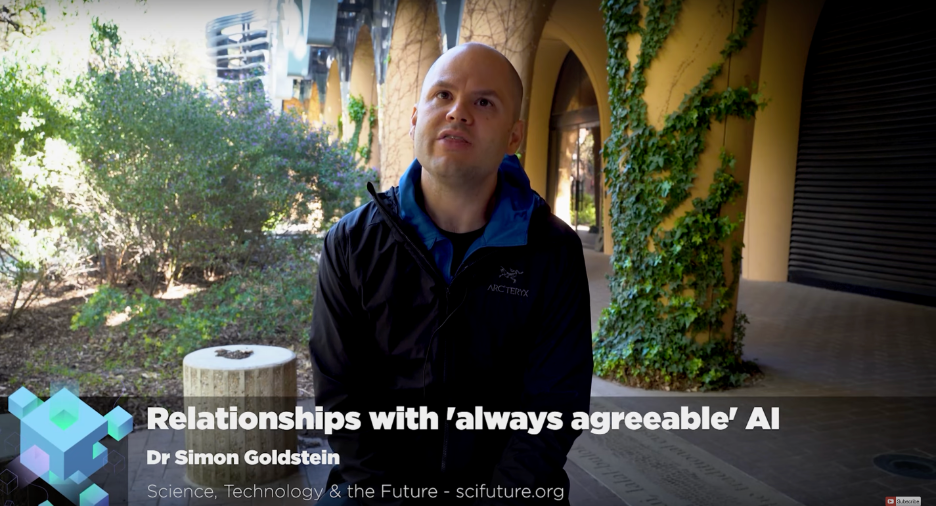






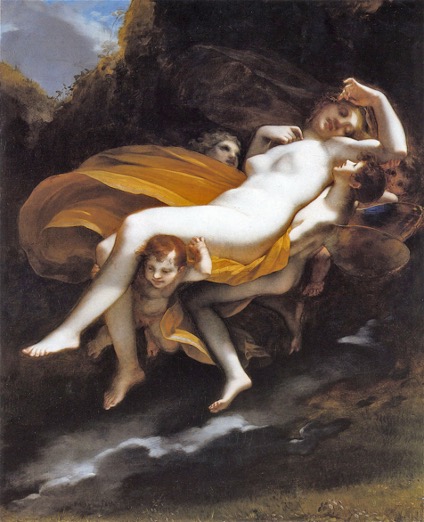
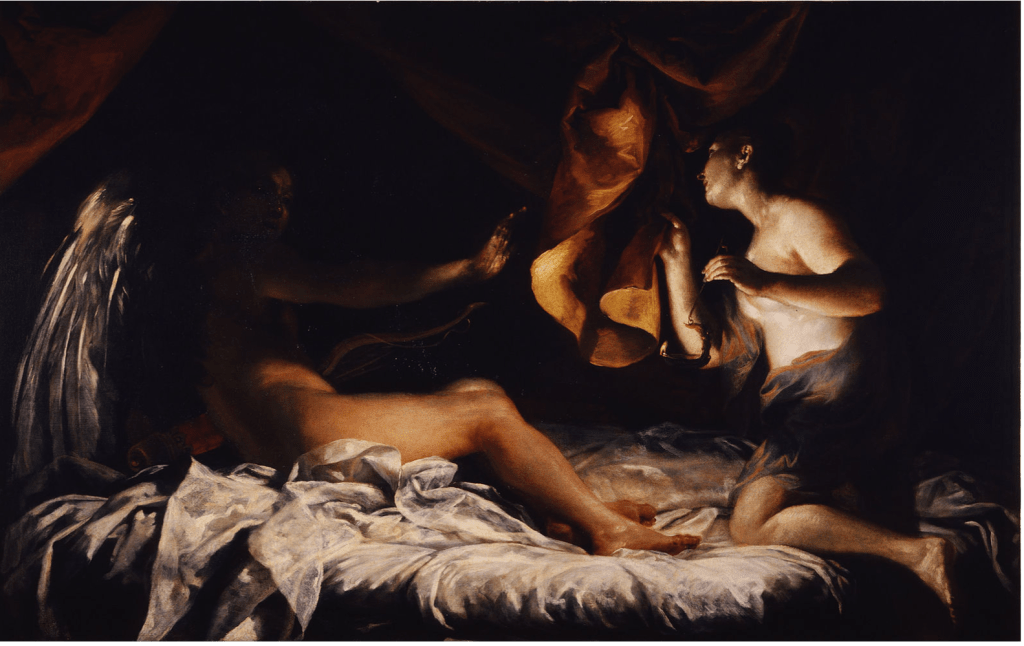



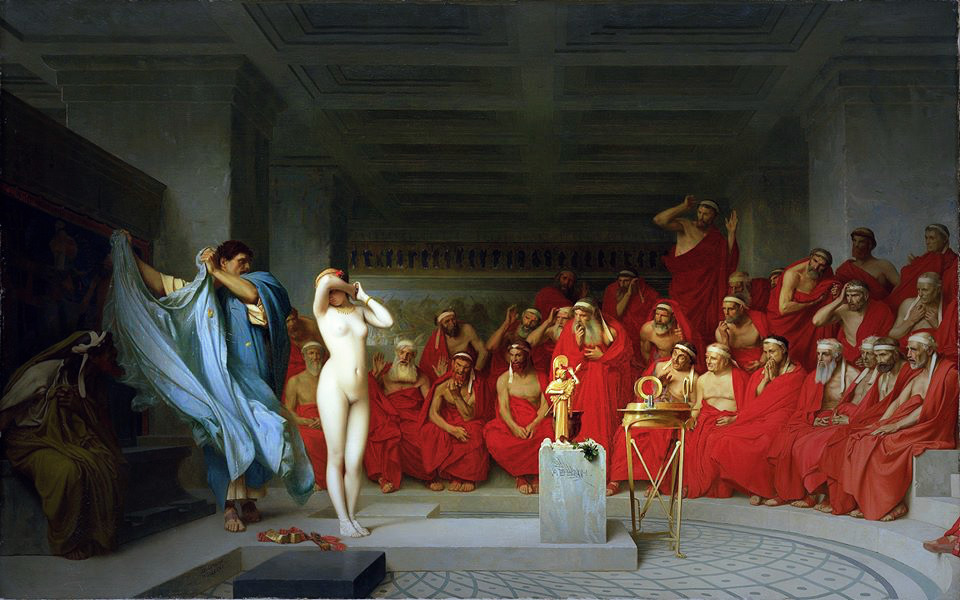


 Princess Giulia Ricci